生活广角
80-year-old Chinese illustrator receives 'Nobel Prize for children's literature'_我的网站

A |
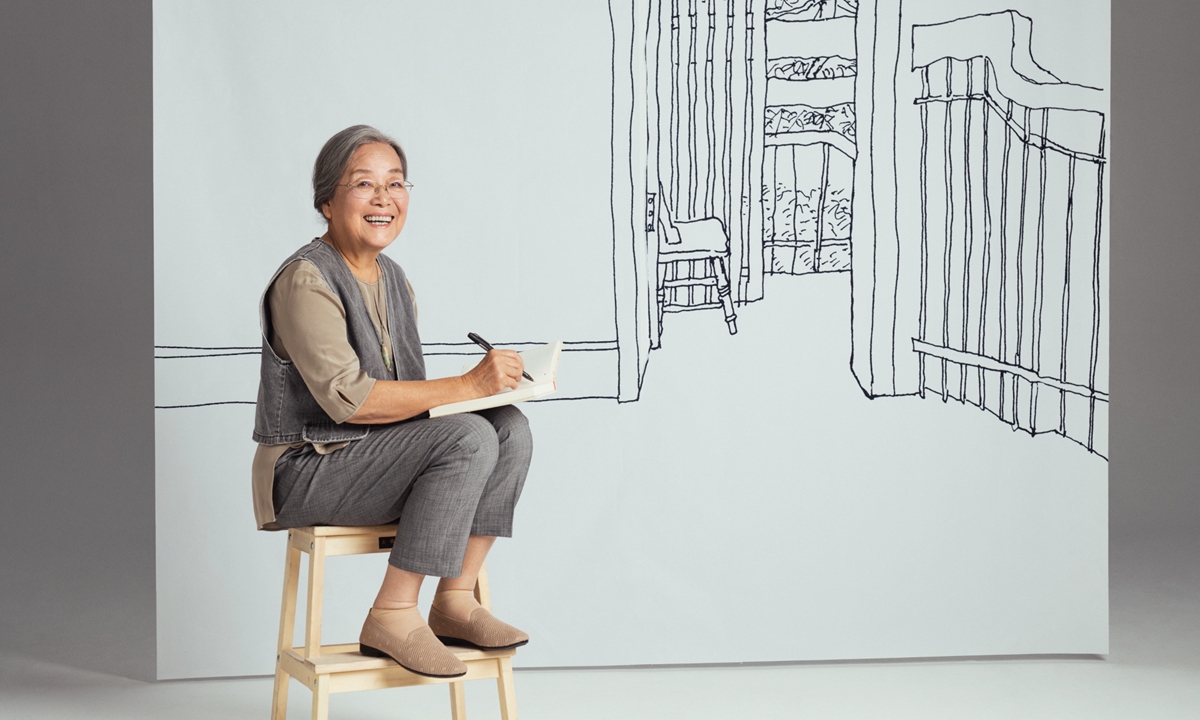
The prize is awarded every two years by the International Board on Books for Young People (IBBY) to a living author (since 1956) and illustrator (since 1966). The award is often referred to as the "Nobel Prize for children's literature," honoring lifelong achievements that have made a lasting and important contribution to children's literature.
During the award ceremony, IBBY President Basarat Kazim praised Cai for the elegant, unrushed style in her works, which encourages children to look closely and discover beauty in quiet corners, according to the Guangming Daily.
Kazim said Cai's works have an unhurried elegance that encourages children to look closely and discover beauty in quiet, everyday moment.
"This year's winner, Cai Gao, is extremely special. She is as beautiful a person as the drawings she does," Kazim said.
Following author Cao Wenxuan's win of the Hans Christian Andersen Awards as a writer of children's literature in 2016, Cai's achievement means that Chinese creators have now won both the author and illustrator categories, a "double victory."
In her acceptance speech, Cai said, "The future of the world lies in children. There is no greater happiness than creating for them." She also noted that children's books are bridges, connecting cultures and hearts around the world.
Reflecting on her childhood and her years teaching in rural villages, Cai recalled that after six years working as a rural primary school teacher in the 1980s, she joined a publishing house, where she spent two decades as a children's book editor. "This job taught me the most important lesson: to see life through the eyes of a child, and to use art as a way of expressing my feelings about life," she noted.
"I feel the profound weight of this gift from life. I'm filled with mixed emotions. I'm moved and grateful for everything I've been through. Every experience has shaped me into the person I am today," she added.
Alongside her editing career, Cai kept creating original picture books. Her well-known book Yueliang Baba is based on folk songs her grandmother would sing in her native Changsha dialect. Works like Huocheng 1938 (lit: Fire City 1938) were inspired by memories of wartime in Changsha, capital of Central China's Hunan Province. The rural scenery and farming scenes in The Land of the Peach Blossom, a book which is also listed as textbooks for primary school students in Japan, all reflect her lifelong connection to the Hunan countryside and many years quietly editing books at her desk, according to the China News Service.
Though her illustrations reflect the atmosphere of the times, Cai told the Global Times that her stories' true intentions go beyond the visual; she hopes her work can teach children that "fearlessness and love are ways to overcome hardship."
Books such as Bao'er, Hua Mulan, The Land of the Peach Blossom, and The Hundred Birds' Feather Robe have established Cai as an illustrator who skillfully interprets traditional Chinese culture. She constantly revisits the classics, striving to connect ancient stories to contemporary social and cultural themes.
Before winning the Hans Christian Andersen Award in 2026, Cai became, in 1993, the first Chinese illustrator to win the Golden Apple Award, one of the world's top international honors for children's illustration. Cai has always emphasized that these awards do not belong to her alone.
"When I learned that I had won the award, my first thought was of all the creators of my generation. This award is not just mine, it belongs to all of us," she said.
Cai's victory fills a six-decade gap for Chinese illustrators in the award's history, Zhang Peng, an associate professor at Nanjing Normal University and also president of the university's publishing house, told the Global Times. It also shows that original picture books, rooted in Chinese tradition and told with Eastern aesthetics, are fully capable of earning global recognition, Zhang added.
Zhang noted that for a long time, the Chinese children's book market was dominated by foreign imports, and local authors often struggled with the anxiety of imitating Western works. At 80, Cai has set a striking example for the industry with her use of ink-and-wash folk art, proving that the more grounded in national culture a work is, the wider its global reach. This has inspired greater confidence among local creators and encourages more people to focus on traditional Chinese culture, while paving the way for Chinese children's books to go global.
"Cai's achievement is no accident. It marks the moment when Chinese children's books truly found their own voice on the world stage," Zhang said.
。 讯 8月21日,市场监管总局召开“推进实施质量强链”专题新闻发布会。市场监管总局质量发展局副局长张蕾蕾表示,加强质量支撑和标准引领,提升产业链供应链韧性和安全水平,是党中央、国务院着眼全局作出的重要部署。党的二十届四中全会提出,建设现代化产业体系,巩固壮大实体经济根基,要求推动重点产业提质升级。市场监管总局深入贯彻落实党中央、国务院部署,创新实施质量强链,以质量强链十大标志性项目为牵引,以全国百个质量强链项目、首批跨区域质量强链项目、重点民生领域质量强链项目为依托,累计实施质量攻关重点项目2060个,组建质量技术创新联合体2959个,26万家链上企业踊跃参与,成功解决产业链质量堵点卡点问题15万个,有力支撑产业建圈强链、提质升级。

B | 一是质量强链标志性项目取得突破进展。

C | 聚焦新能源汽车、高端科研仪器等大国重器焦点领域,统筹实施质量强链十大标志性项目,圆满完成289项攻关任务,取得了一批重大标志性成果。比如,产业链质量瓶颈加快突破,电动汽车超充项目以国家标准统一超充认证规则,打通充电不兼容、通信不交互堵点;工业机器人项目精准识别幻觉控制,360公斤级重载机器人精度实现2倍提升。关键仪器装置加速落地,成功研制质谱仪、电子显微镜、激光干涉仪等5个领域高端科研仪器新型计量测评装置,达到国际先进水平;新型显示项目研制AR近眼显示虚像测量装置,建立了从极端参数到像素级光色的完整校准体系。创新成果加快推广应用,动力电池项目实现对73万辆新能源汽车实时监测;汽车芯片项目完成了25款关键芯片的认证审查,支撑2000万片芯片规模化上车应用。 二是地方百强链项目凸显特色成效。

D | 各地因地制宜、扎实推进全国百个质量强链重点项目,形成质量问题、攻关清单、政策清单5656份。在推动传统产业转型升级方面,湖南工程机械产业链研制主轴承标准50余项,攻克盾构机主轴承试验验证“卡脖子”难题;江苏突破飞机配套核心部件质量瓶颈,配件合格率从30%大幅提升至90%。在支撑新兴产业培育壮大方面,山东新型显示产业链推行国产化解决方案,累计破解行业质量难题53个;湖北激光产业链集中攻克78项共性质量问题,实现降本增效超1.9亿元,产业规模与市场竞争力同步壮大。在助力未来产业加速前瞻布局方面,陕西氢能产业链建成5大检测平台,成功突破氢燃料电池核心技术;安徽合肥创新“实验室+链主”模式,量子产业核心技术自主可控水平大幅提升。

E | 三是跨区域联动项目强化协同提升。在全国实施首批21个跨区域联动项目,整合全链条、跨区域优质资源,汇聚4500余家企业、300多家技术机构,推进协同攻关、优势互补、成果共用。跨区域协作机制有效运转,“京津冀”脑机接口项目建立“政产学研医金服”质量协同机制和全链条闭环体制;江西、湖北、陕西富硒项目创新“标准、认证、品牌、监管、推广”五维联动机制,联合制修订各类标准284项,三省产业综合产值突破2800亿元。

F | 跨区域资源共享取得突破,川渝智能网联新能源汽车项目搭建全链条测评与风险预警平台,累计接入运营车辆13万辆。行业内卷式竞争得到有效化解,浙江、江苏、安徽、河南、重庆羽绒项目完成75万件产品的质量分级认定,带动8个地市273家企业协同提质;山西、内蒙古、新疆、陕西、宁夏煤化工联动项目引导中西部5省区资源互补、错位发展,解决跨区域质量堵点卡点23个,产业创新能力、产品附加值大幅提升。

G | 四是民生质量强链项目释放普惠实效。聚焦群众关切的家装、富硒、纺织服装等民生领域,以质量强链行动不断增强人民群众的质量获得感、幸福感、安全感。家居材料产品供给质量明显改善。河南构建家装材料质控与快检体系,严控有害物质释放,推动6大类重点产品质量提升;江苏眼镜产业链攻克超精密加工技术,规上企业出口总值同比增长4.8%。纺织服装品质加速提档升级,广东联合青海构建高海拔环境适配验证体系,首创纺织服装“3H高原认证”,将新产品研发周期缩短50%;四川丝纺服装产业链攻克面料洁净度、含油率稳定性难题,蚕茧优良率提升10%以上。

H | 富硒产品品牌影响力持续扩大,推动修订《富硒稻谷》等国家标准,《富硒产品认证技术规范》落地执行,组建全国首个富硒产业链质量技术创新联合体,97家单位联合攻克15个富硒产业质量瓶颈问题,以质量升级撬动产业增效、带动农民增收。

I | 版权申明:凡注有“”或电头为“”的稿件,均为独家版权所有,未经许可不得转载或镜像;授权转载必须注明来源为“”,并保留“”的电头。 。
Current article:http://uckqxr.cheshenzhuaduanza.buzz/news/20260826_9207.html
Published on:08:18:58